Subscribe to me on YouTube

WildTrack is a 501(c)3 not-for-profit organisation

Explore our new site! Main tabs give overviews & drop-down menus further content


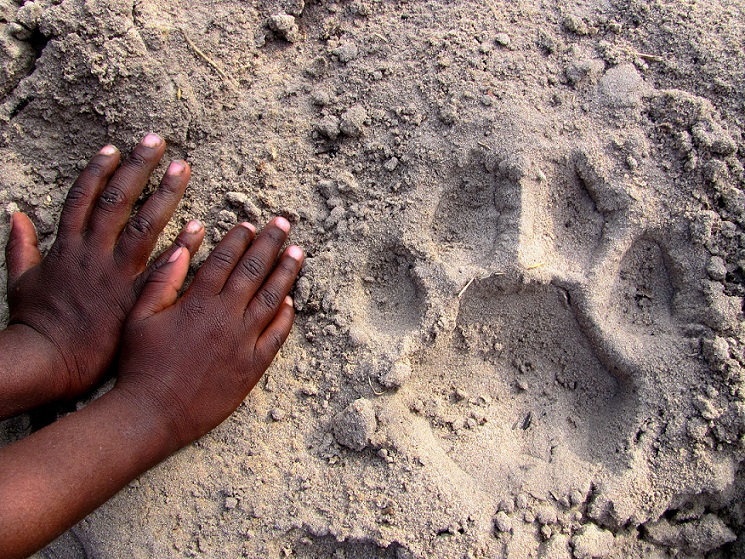
WildTrack has developed a non-invasive Footprint Identification Technique (FIT) which can identify endangered animals at the species, individual, age-class and sex levels. Animals have unique feet, in the same way that humans have unique fingerprints. This allows us to monitor their status and work with decision-makers in environmental and conservation sciences to implement effective policies.Polar bear front view

Using footprints to monitor endangered species is non-invasive and cost-effective. It is therefore a sustainable solution, particularly for elusive species, and sustainability is vital if conservation is to be successful. Moreover, since FIT is based on the ancient tracking techniques used by indigenous trackers, it engages local communities in the conservation effort - this too is generally recognised to be essential to the success of any wildlifepolar_bear_frontleft-250-32 conservation effort.

Footprints can be found on a variety of different substrates. This left front footprint image from a Polar bear illustrates the excellent detail which can be obtained, even in snow, one of the most challenging substrates to work with.

WildTrack has projects helping develop and implement FIT across the world, from the Polar bear in the Arctic to the mountain lion in Texas, to the cheetah in Southern Africa.....even the tiny dormouse in the UK.

Helping us in our work are experts in computer vision, statistics, software and design engineering, forensics, biometrics, photography and the life sciences. Why not explore our site and come join us?!

Read more...

Why the need to monitor endangered species? We face an unprecedented crisis in the loss of biodiversity on our planet. UNEP, the United Nations Environment Program, estimates that between 150 and 200 species are currently being lost every day. The renowned American evolutionary biologist, E.O, Wilson estimated that by 2100, half of all our current species will be lost if we continue as we are. This mass extinction is due, in large part, to unsustainable methods of production and consumption. We estimate that there may be as many as 100 million different species on this planet, of which only 1.7 million have been identified.

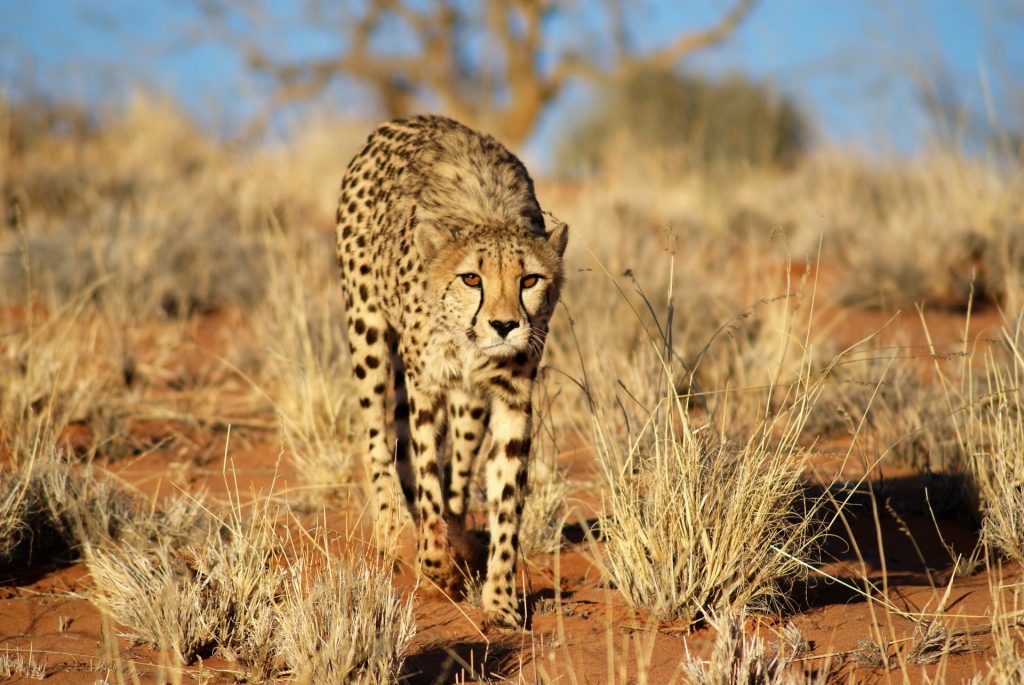
The Global Mammal Assessment, presented in 2008 by more than 1800 research groups in 130 countries indicated that between 25 and 36% of all mammal species may be in danger of extinction, due to various threats ranging from habitat destruction or ecosystem change such as reduction of prey species, illegal poaching and climate change. cheetah lateral view

A further 836 species have such a paucity of data on numbers and distribution that we are unable to ascertain their status. This is a potentially catastrophic change to the world as we know it today. Many of these endangered species are flagships for their ecosystems. If they go, our motivation to protect their environments will be much reduced.

However, there are many approaches to a successful conservation strategy. The top priority, most conservationists would now agree, is firstly to secure and protect the natural habitat required by each species in as pristine an ecological state as possible, and then secondly to monitor the progress of species within that habitat. We urgently need methods for monitoring which will be cost-effective, objective and non-invasive, to give us the data we need on the numbers and distribution of these endangered species.


.


Biodiversity

Biodiversity is the source of all our fresh air, food, clean water, fuel and medicine….and as yet untapped scientific knowledge. It is all the animals, plants and microscopic life in the world, all the ecosystems in which they live, and all the processes they are a part of. More than 40% of current prescription drugs are made from one or more natural compounds from living plants. So, biodiversity is life, and it is all our lives.


"Do nothing, and not only do we lose trillions of dollars' worth of current and future benefits to society, we also further impoverish the poor and put future generations at risk. The time for ignoring biodiversity and persisting with conventional thinking regarding wealth creation and development is over. We must get on to the path towards a green economy."

Pavan Sukhdev, Economist and Lead Author of the UN TEEB report, October 2010.

Summer 2013 Featured Project


The Amur Tiger in North-East China

Amur_tiger-300-225


In December 2011 we visited north-east China, at the invitation of WWF China and Dr Guangshun Jiang’s team at the North-East Forestry University (NEFU).  They are developing innovative new approaches to monitoring the remaining few Amur tiger in China, and contacted us to find out whether FIT might be able to help.  

The Amur tiger population in China is contiguous with a much larger population in Russia, now thought to number around 400-450 individuals.  WWF China would like to encourage this population to expand back into it’s original range in China.  The main challenges to be overcome are increasing the prey-base, and reducing illegal killing.  Central to progress is a better understanding of numbers and distribution.  FIT may provide an inexpensive and accurate tool in this quest.

This year we collected footprints from 40 captive Amur tigers in China.  Using FIT in JMP software we have been able to develop an algorithm to identify individuals and the sex of these individuals.  Also, Dr Jiang's team collected seven long footprint trails from free-ranging tigers in a short period of time.  Using the captive training set, we concluded that these trails were made by 4-5 different individuals.

FIT appears to show considerable promise as a monitoring tool for Amur tiger in the snow.  We now need to collect more prints from free-ranging tigers and validate FIT for known free-ranging populations over the next 2-3 years, and funding to support this project.


Polar bear video

Polar bear on ice

Take a look at this video, sponsored by the SAS Institute, showing the work we're doing to develop an Inuit-led protocol for monitoring Polar bears, in conjunction with Dr Peter Van Coeverden de Groot of Queens University Ontario.